The 1960s gave us some of the most iconic, boundary-pushing hairstyles in modern history. From towering beehives to rebellious pixie crops, this decade redefined beauty standards and launched looks that continue to influence runways, red carpets, and everyday styling decades later.
Whether you are drawn to vintage glamour, mod minimalism, or bohemian freedom, these thirty timeless hairstyles from the sixties offer endless inspiration for your next transformation. Each one carries a piece of cultural history and proves that truly great style never expires.
Crown Braid
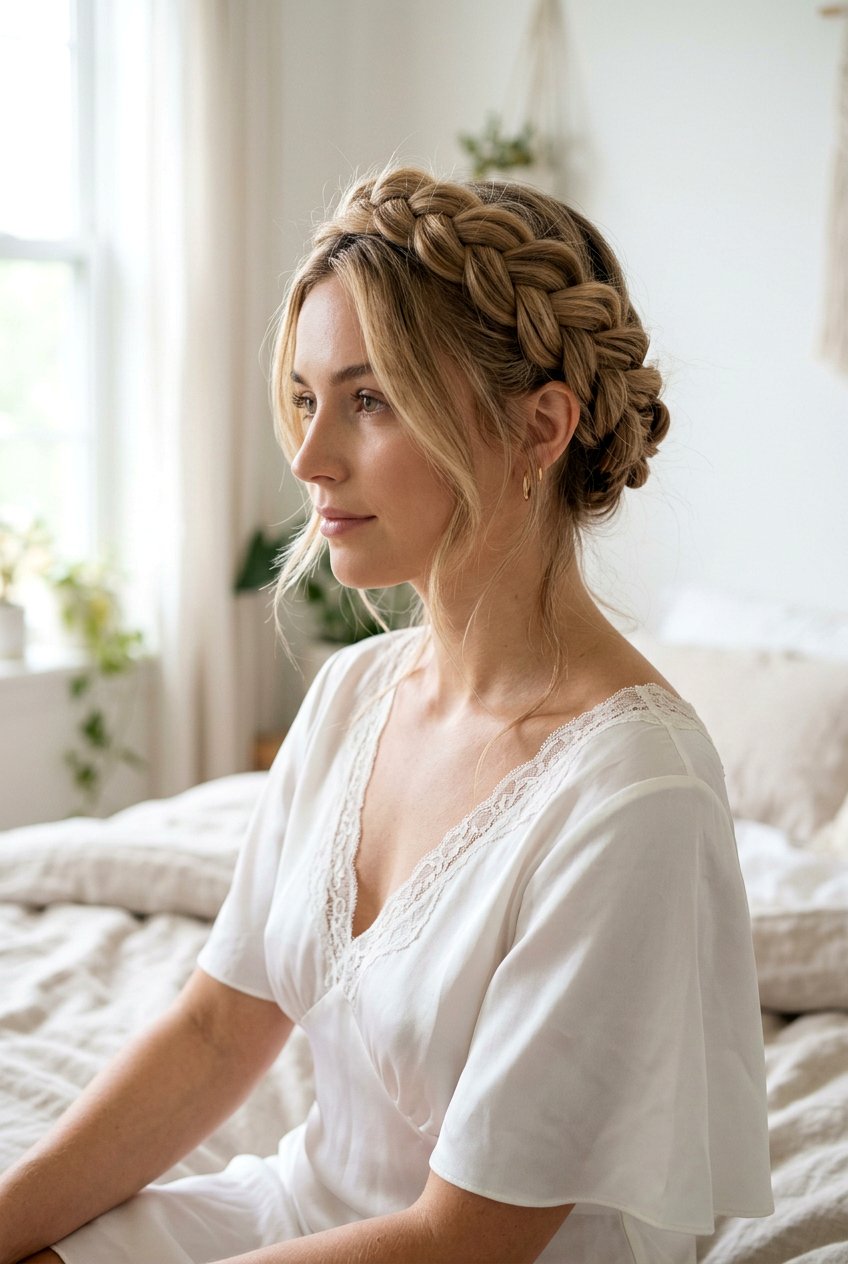
Wrapping a braid around the entire perimeter of your head like a regal halo, the crown braid was a beloved sixties style that brought together bohemian spirit and feminine elegance. It looks intricate and polished while being surprisingly practical, keeping all of your hair swept up and away from the face.
This versatile style adapts beautifully to casual daytime outings and formal evening events alike. You can wear it tightly woven for a sleek finish or slightly loosened for a romantic, textured look. Adding small flowers or pins between the braided sections takes it from everyday to special occasion instantly.
The crown braid flatters virtually every face shape by framing the forehead and drawing attention to the eyes. It works on straight, wavy, and curly textures and requires medium to long hair for the full wraparound effect. This is the sixties hairstyle that carries a touch of fairy-tale magic into the modern world.
Vidal Sassoon Cut

Vidal Sassoon revolutionized hairstyling in the 1960s by introducing geometric, wash-and-wear cuts that freed women from weekly salon sets and rigid styling routines. His precision cuts featured sharp angles, clean lines, and architectural shapes that moved with the head rather than sitting stiffly in place.
These cuts were a radical departure from the heavily sprayed, laboriously constructed styles that preceded them. A Sassoon cut was sleek, modern, and incredibly low-maintenance, embodying the decade’s spirit of liberation and forward thinking. The sharp geometry flatters angular face shapes and creates stunning visual impact.
The influence of Sassoon’s work is still visible in every precision bob, asymmetrical crop, and geometric cut created today. Wearing a Sassoon-inspired style is a tribute to a true revolutionary who changed how the world thinks about hair. It is modernity in its purest, most elegant form.
Hippie Hair

Long, flowing, and completely unstructured, hippie hair defined the countercultural movement of the late 1960s. It was a rejection of everything the previous decade’s rigid styling represented, celebrating natural texture, air-dried volume, and freedom from hot tools. Headbands, floral crowns, and beaded accessories completed the look.
Hippie hair worked because it embraced whatever your natural texture happened to be, whether that was stick-straight, wildly wavy, or tightly curled. The philosophy was simple: let your hair be exactly what it is, and adorn it with meaningful accessories that reflect your spirit.
This earthy, laid-back aesthetic has experienced multiple revivals and remains a cornerstone of bohemian fashion today. It is perfect for music festivals, outdoor gatherings, and anyone who believes that the most beautiful hair is hair that is allowed to exist in its natural state. Freedom looks gorgeous on everyone.
Beehive
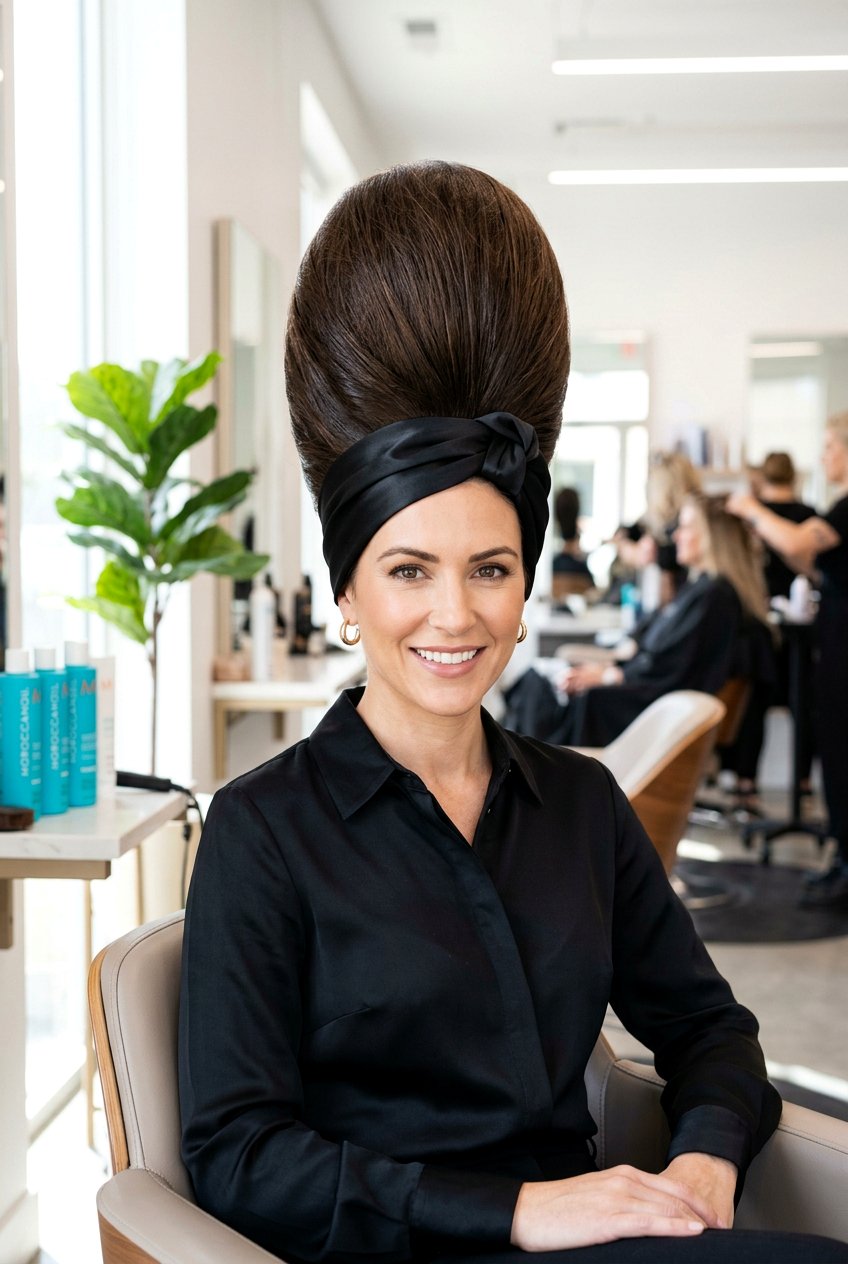
No discussion of sixties hairstyles is complete without the beehive, the towering, gravity-defying updo that became the decade’s most iconic silhouette. Built through intense backcombing, strategic pinning, and generous helpings of hairspray, the beehive added dramatic height that transformed the wearer’s entire profile.
The beehive was a style that demanded attention and communicated sophistication, glamour, and a willingness to go big. It suited formal events, cocktail parties, and any occasion where making an entrance was part of the plan. The style elongates the face beautifully and adds impressive stature.
Modern interpretations tone down the extreme height while keeping the voluminous spirit, creating versions that work for contemporary weddings, themed parties, and vintage-inspired photo shoots. The beehive remains a symbol of an era that believed beauty should be bold, ambitious, and unapologetically dramatic.
Tousled Waves

Offering a softer, more accessible take on sixties glamour, tousled waves provided volume and texture without the structured precision of Hollywood waves or the height of a bouffant. They felt natural, touchable, and effortlessly chic, bridging the gap between polished style and relaxed beauty.
Tousled waves work on virtually every hair length and texture, making them one of the most versatile sixties-inspired styles you can adopt today. A large-barrel curling iron and a quick finger-comb create the look in minutes, and a light-hold spray keeps the tousled shape intact without stiffness.
This is the hairstyle for women who appreciate vintage glamour but prefer an approachable, everyday interpretation. It photographs beautifully, pairs with everything from casual denim to cocktail dresses, and communicates a quiet confidence that needs no towering updo to make itself known.
Pixie Cut
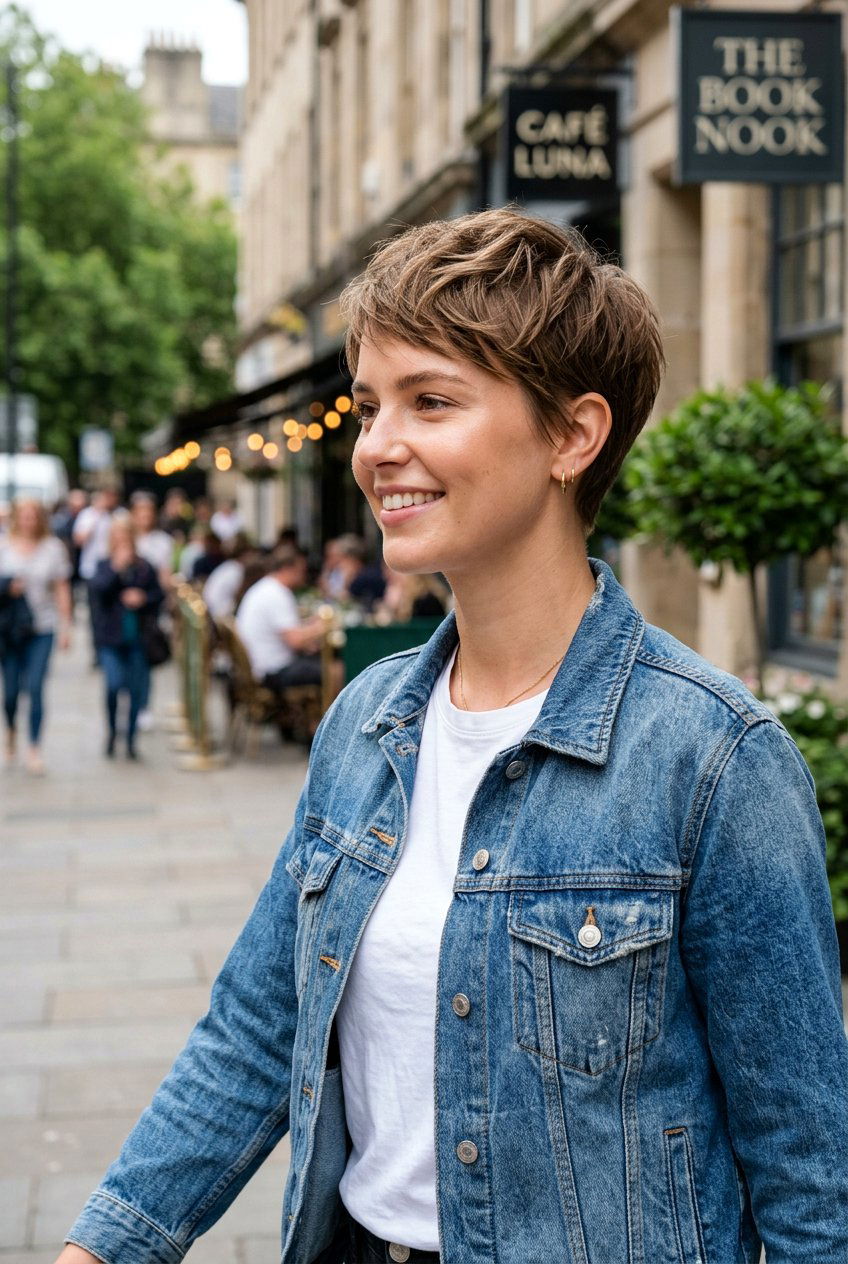
Bold, daring, and radiating pure confidence, the pixie cut was a revolutionary choice for women in the 1960s who wanted to break free from the expectation that femininity required long hair. Its short, cropped length put the focus entirely on the face, highlighting eyes, cheekbones, and jawlines with striking clarity.
The pixie is refreshingly low-maintenance, requiring minimal styling time and product. A quick tousle with wax or a smooth comb-through with serum is all you need for a completely polished look. It suits oval, heart-shaped, and angular face shapes particularly well.
Decades later, the pixie cut remains one of the most empowering haircut choices a woman can make. It communicates self-assurance, boldness, and an understanding that true beauty comes from confidence rather than convention. If the sixties taught us anything about hair, it is that short can be every bit as glamorous as long.
Space Buns
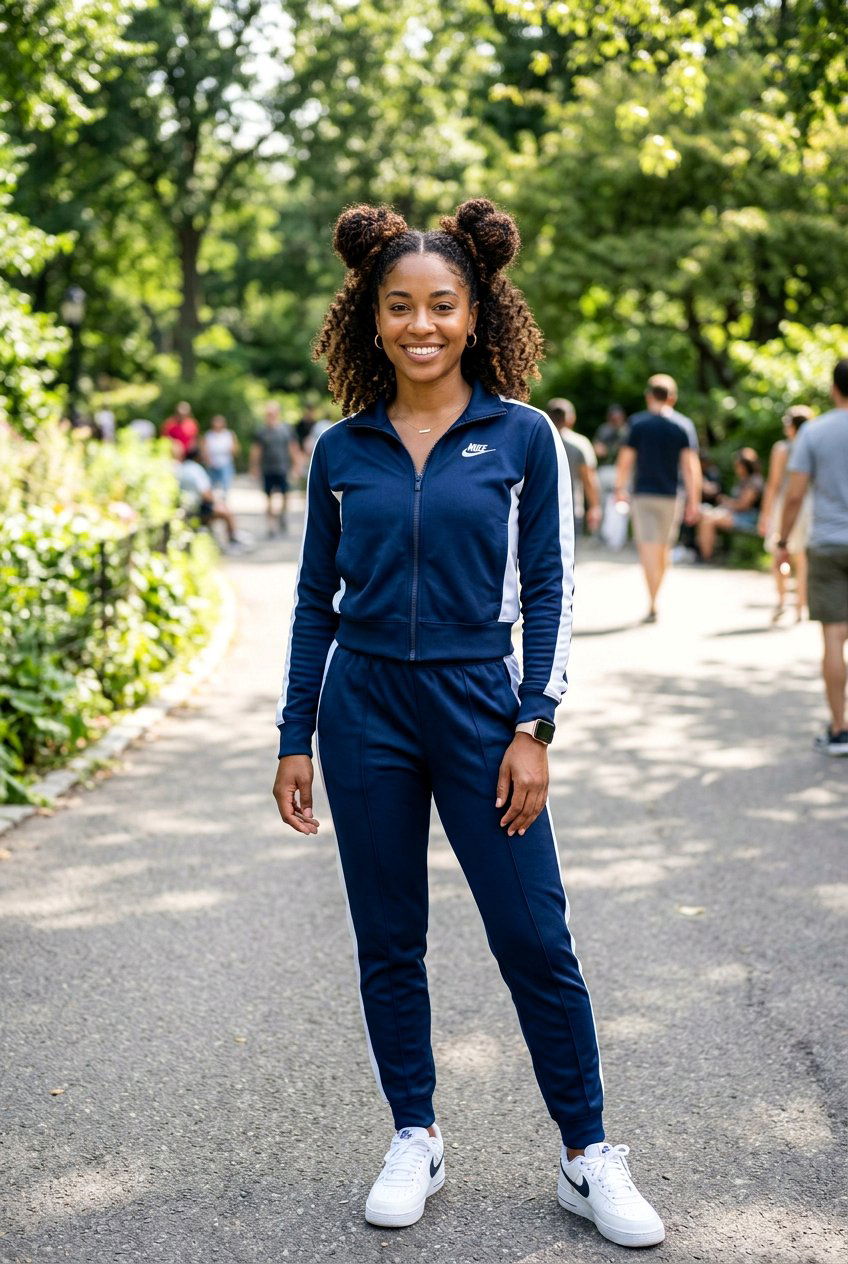
Capturing the playful, futuristic vibes of the late sixties space age, space buns consist of two buns placed on either side of the head in a perfectly symmetrical arrangement. They are fun, spirited, and carry an energy that is simultaneously retro and thoroughly modern.
Space buns work on virtually every hair length, from pixie-length mini buns to full, voluminous coils created with longer hair. They look fantastic with bold makeup, graphic eyeliner, and metallic accessories that nod to the decade’s fascination with space exploration and futurism.
This style bridges generations beautifully, appearing on festival-goers, fashion runways, and everyday style icons who love the youthful energy it brings. Whether you wear them sleek and smooth or deliberately messy, space buns are a joyful, expressive hairstyle that captures the optimistic spirit of the sixties perfectly.
Bouffant
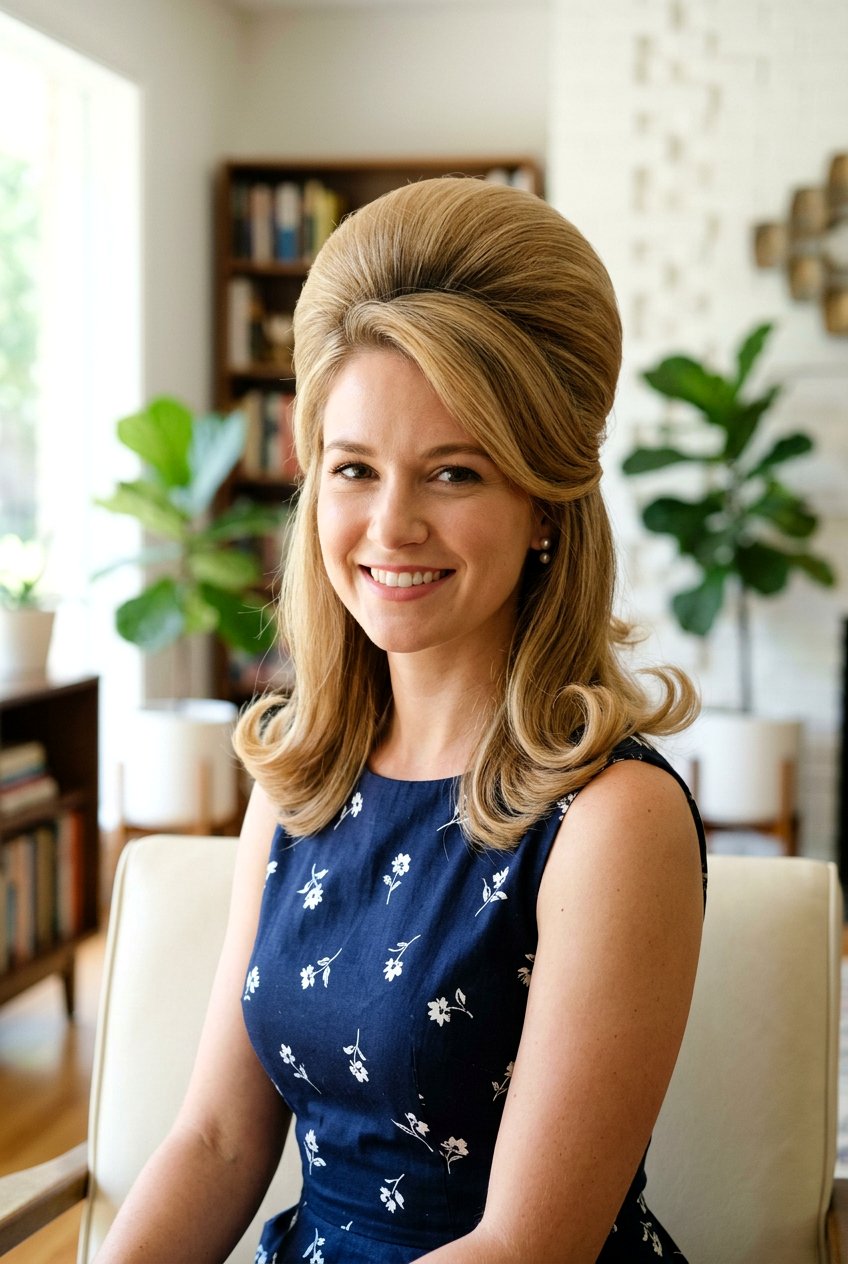
The bouffant defined sixties sophistication with its voluminous, rounded shape achieved through backcombing at the crown and smoothing the top layer over it for a polished finish. It was the slightly more accessible cousin of the beehive, delivering impressive volume without the extreme height.
This style added glamorous body to straight, fine hair and gave thicker hair a structured, sculpted silhouette. Hairspray was essential to maintain the rounded shape, and the overall effect was one of polished femininity that suited everything from office wear to evening gowns.
The bouffant remains relevant in its modern form, appearing in softened versions at weddings, galas, and formal events. Even a subtle bit of backcombing at the roots nods to this iconic technique. It proves that well-placed volume can transform any hairstyle from ordinary to extraordinary.
Mod Bob

Sharp angles and bold geometric shapes defined the mod bob, a quintessential sixties cut that reflected the era’s fashion-forward, rule-breaking energy. This was a hairstyle that made a statement about the wearer’s modernity, independence, and refusal to blend into the background.
The mod bob typically featured a precise jaw-length cut with blunt ends and sometimes an asymmetrical element. It looked striking with heavy bangs and the graphic eyeliner that defined mod fashion. Straight, sleek textures show off the geometric precision best, though modern versions can incorporate subtle texture.
For women who want a haircut that communicates confidence and contemporary style while honoring vintage roots, the mod bob is a perfect choice. It is bold without being overwhelming and requires less styling effort than its visual impact would suggest. The mod bob is timeless fashion-forward thinking made tangible.
Pin Curls
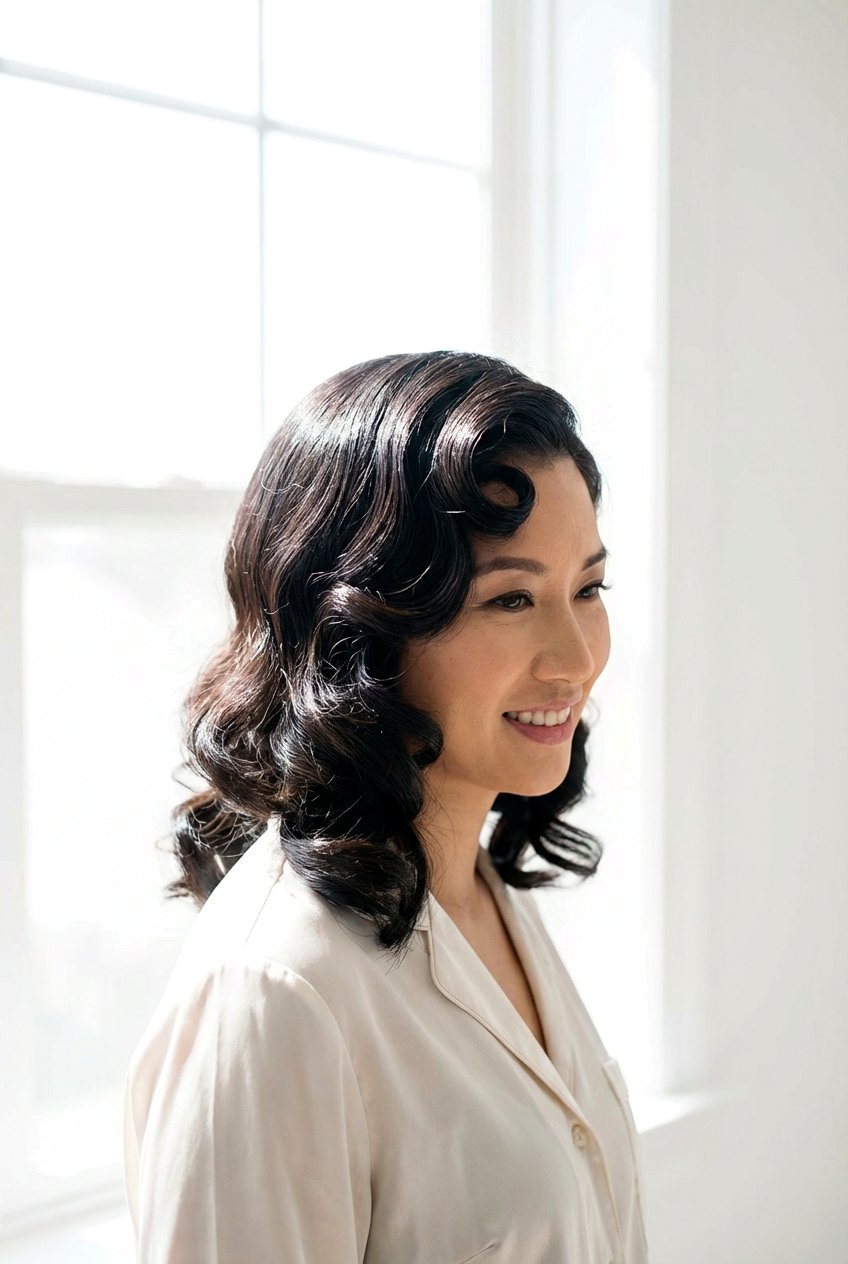
Before hot rollers and curling wands became household items, pin curls were the go-to technique for creating beautiful, heatless ringlets. Small sections of damp hair were wound into flat coils against the scalp, secured with pins, and left to dry into tight, springy curls that could be brushed out into soft waves or left as defined ringlets.
Pin curls offered incredible versatility because the size, direction, and placement of each curl determined the final style. Tight, uniform curls created glamorous, vintage Hollywood waves, while varied sizes produced natural-looking body and movement.
This technique is experiencing a well-deserved revival among women who want beautiful curls without heat damage. It is gentle on the hair, produces long-lasting results, and connects you to a styling tradition that spans generations. Pin curls are proof that the best beauty techniques are often the simplest ones.
Flip Hairstyle

Cheerful, bouncy, and unmistakably sixties, the flip hairstyle featured ends that curled outward rather than under, creating a playful, upturned silhouette. It was Jackie Kennedy’s signature look and perfectly captured the decade’s optimistic, youthful spirit.
The flip worked on both short and medium-length hair and was typically achieved by rolling the ends outward on large rollers or using a round brush during blow-drying. The result was polished yet fun, sophisticated yet approachable, a combination that made it one of the most popular everyday styles of the era.
Modern versions of the flip add movement and personality to bobs and shoulder-length cuts. It is an easy way to inject vintage charm into your daily styling routine and carries a joyful energy that lifts your entire look. The flip is the hairstyle equivalent of a smile.
Half-Up Bouffant

Blending the elegant volume of a bouffant with the casual beauty of wearing your hair down, the half-up bouffant became one of the most beloved everyday styles of the sixties. The crown is teased for height, smoothed over, and pinned at the back, while the remaining hair falls freely around the shoulders.
This combination is effortlessly chic and flattering on virtually every face shape. The volume at the crown adds height and elongates the face, while the loose hair below softens the look and provides romantic movement. It transitions seamlessly from daytime errands to evening events.
The half-up bouffant is one of the easiest sixties styles to recreate today and adds instant sophistication to any outfit. A quick backcomb, a couple of pins, and a light mist of hairspray are all you need. It is vintage elegance made accessible for the modern woman.
Victory Rolls
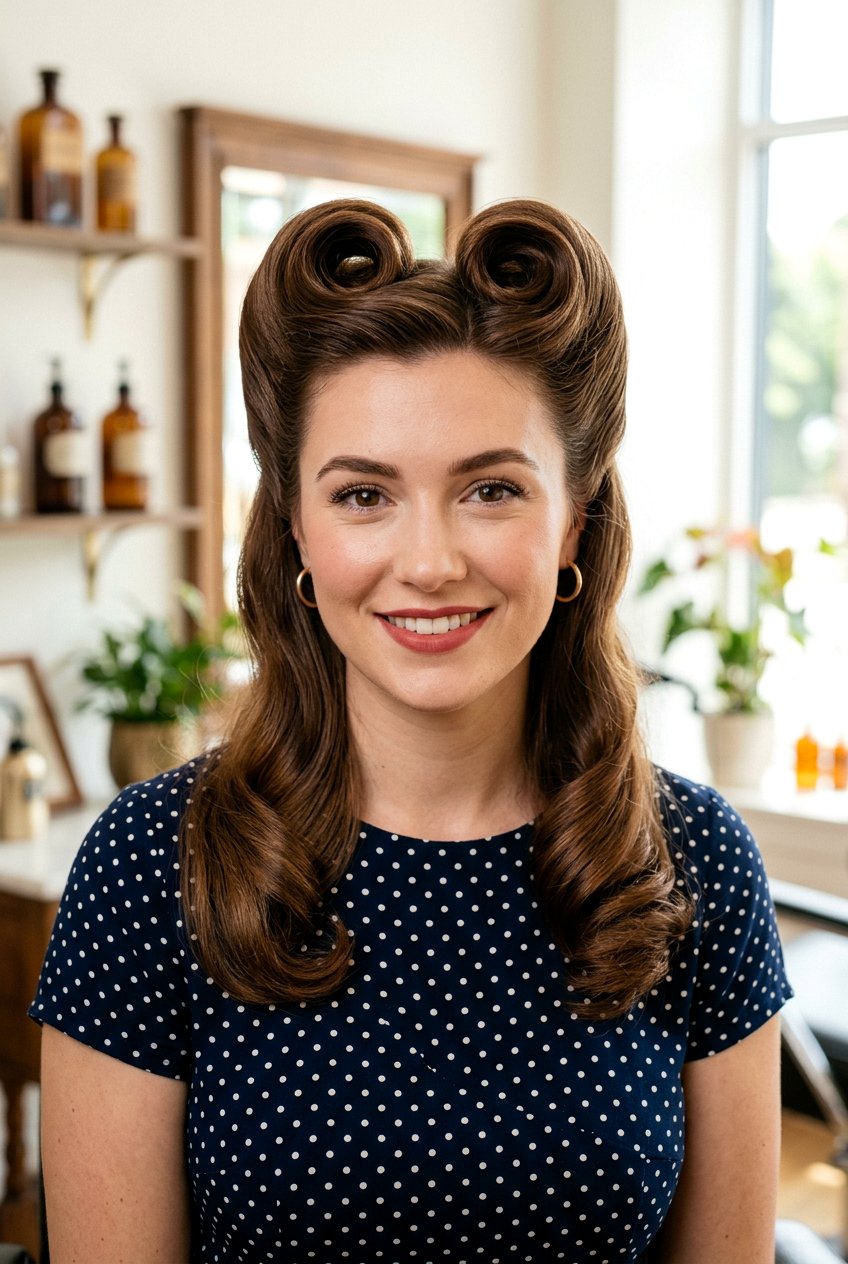
While victory rolls originated in the 1940s, they experienced a significant revival among sixties women who embraced vintage-inspired glamour. These sculpted, rolled sections of hair frame the face like dramatic parentheses, adding a theatrical flair that transforms any look into a showstopper.
Creating victory rolls requires some practice but delivers an incredibly striking result. Sections of hair are teased for volume, rolled under and toward the scalp, and pinned to create perfect cylindrical shapes on either side of the head. The rest of the hair can fall freely or be gathered into an updo.
Victory rolls make a bold statement at themed events, vintage weddings, rockabilly gatherings, and any occasion where dramatic hair is welcome. They communicate a love of classic beauty traditions and a willingness to put artistry into personal style. Few hairstyles carry as much personality and visual impact.
Twiggy Cut

Named after the iconic British supermodel who personified sixties youth culture, the Twiggy cut was a short, boyish crop that put all the emphasis on the eyes and cheekbones. It was a radical departure from the era’s volumized styles and symbolized the youthful rebellion and fashion revolution of the decade.
The Twiggy cut is characterized by its clean, close-cropped sides and slightly longer, textured top. Paired with the dramatic, doll-like eye makeup that Twiggy made famous, it created a look that was simultaneously innocent and revolutionary. It works best on fine to medium textures and petite features.
This cut remains a powerful style choice for women who want maximum impact with minimum length. It is effortlessly cool, requires almost no styling time, and makes a statement about self-confidence and individuality that transcends any single decade.
Chignon
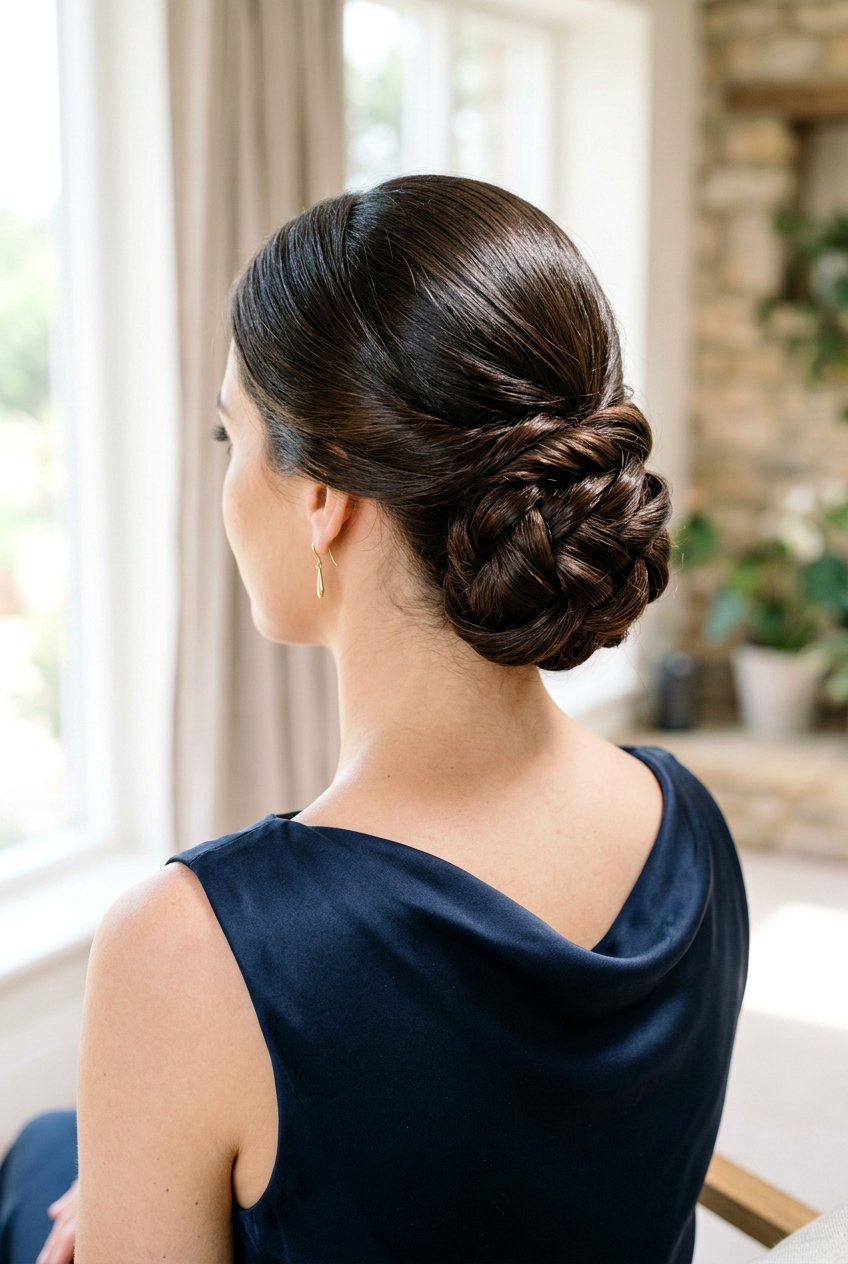
The chignon is a low bun positioned at the nape of the neck that epitomizes timeless sophistication. In the sixties, it was often adorned with decorative pins, small combs, or jeweled accessories that added sparkle and personality to the clean, understated shape.
This versatile updo can range from simple and smooth to complex and ornate depending on the occasion. A basic twisted chignon takes minutes to create, while a more elaborate version with braided elements or pinned curls can serve as a formal event hairstyle. It flatters every face shape and hair texture.
The chignon is one of those rare hairstyles that has remained consistently relevant for decades because its elegance is universal. It keeps hair neatly contained while looking refined and intentional. For any event that calls for polished beauty, the chignon delivers with effortless grace.
Beehive Ponytail

Combining the dramatic height of a beehive with the casual functionality of a ponytail, this hybrid style captures the best of both worlds. The crown is teased and sculpted into a voluminous dome while the remaining hair is gathered into a ponytail at the back, creating a silhouette that is both elegant and playful.
This style adds significant height without the full commitment of a complete beehive, making it more wearable for everyday occasions. It works beautifully for themed events, vintage-inspired outfits, or any day when you want your hair to carry a touch of sixties flair without going full retro.
The beehive ponytail is easier to maintain than a full beehive because the ponytail section does not require the same structural support. A good backcomb at the crown, some smoothing spray, and a secure elastic at the base create the look in about ten minutes. It is sixties glamour made approachable.
French Twist
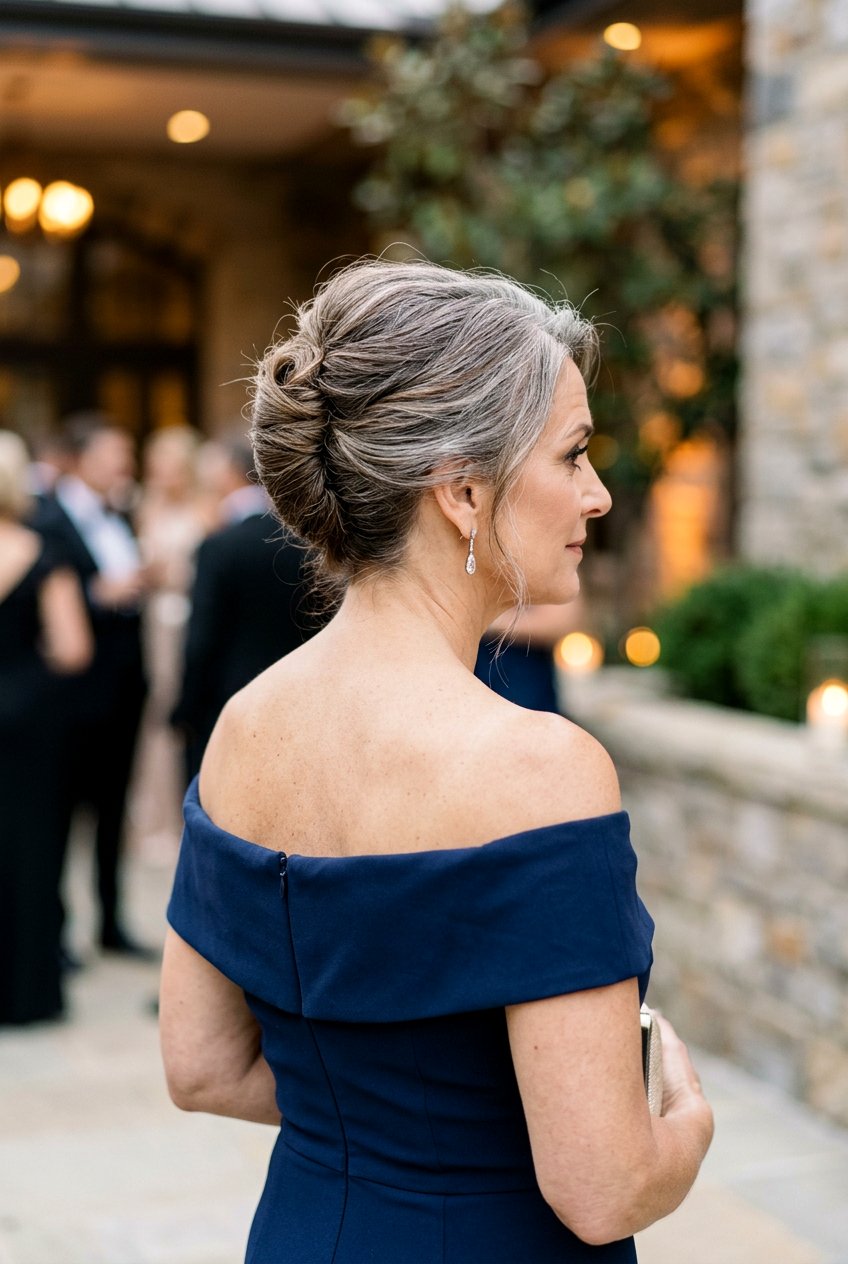
The French twist is the epitome of structured elegance, featuring hair rolled vertically along the back of the head into a sleek, seamless column. In the sixties, it was the go-to updo for formal events, evening wear, and any occasion that called for sophisticated, polished beauty.
Creating a French twist involves sweeping the hair to one side, folding it back over itself, and pinning it into a smooth, vertical roll. The technique takes some practice to master but produces a result that is undeniably refined. It reveals the entire neckline and pairs beautifully with statement jewelry.
This style communicates quiet power and classic taste. It has never gone out of fashion because its elegance is universal and its execution is adaptable to any hair texture or formality level. The French twist is sixties sophistication at its most distilled and most beautiful.
Sleek and Straight

In a decade dominated by volume and curls, the sleek and straight look was a refreshingly minimalist counterpoint that reflected the mod fashion movement’s love of clean, unadorned lines. Hair was ironed or blown perfectly flat, creating a polished, almost sculptural quality that emphasized the beauty of simplicity.
This style was the perfect canvas for the era’s bold clothing, graphic makeup, and statement accessories. It let the hair serve as a frame rather than a focal point, directing attention to the face and outfit. It works best on naturally straight or fine textures but can be achieved on any hair type with a quality flat iron.
The sleek and straight look remains a modern classic that communicates sophistication, confidence, and refined taste. It is the ultimate less-is-more hairstyle and proves that sometimes the most powerful statement is the simplest one.
Pageboy Cut

With its smooth, rounded shape and straight-across bangs, the pageboy cut brought vintage charm and polished refinement to the sixties hairstyle landscape. The hair is cut to a uniform length, typically around the chin or just above the shoulders, and curled slightly under at the ends for a smooth, helmet-like silhouette.
The pageboy suits women who appreciate clean, defined shapes and a retro aesthetic. The blunt bangs frame the forehead and draw attention to the eyes, while the rounded shape adds softness to angular features. Straight and slightly wavy textures produce the most authentic-looking result.
This cut carries a nostalgic sweetness that feels both innocent and intentional. It is a wonderful choice for women who want a vintage-inspired look that is easy to maintain and consistently elegant. The pageboy proves that classic proportions and clean lines never go out of fashion.
Bouffant Bob

Merging the voluminous spirit of the bouffant with the structured shape of a classic bob creates a hairstyle that delivers body, flair, and sophistication in a manageable, shorter length. The hair is cut to bob length and teased at the roots to create impressive volume that gives fine hair life and thick hair gorgeous shape.
The bouffant bob was a practical yet glamorous choice for women who wanted the drama of volume without the weight and maintenance of long hair. It suits round and oval face shapes particularly well and looks fantastic with both subtle and bold makeup choices.
This style captures the vibrant, optimistic spirit of the sixties in a wearable, modern package. It requires nothing more than a good root tease and a light hold spray to maintain throughout the day. For the woman who wants volume, style, and vintage charm in a short, manageable cut, the bouffant bob is ideal.
Layered Cut

Gaining popularity in the late sixties, the layered cut introduced movement and dimension to hair that had previously been cut in uniform, blunt lines. By varying the length of different sections, stylists created natural bounce, texture, and visual depth that made hair appear thicker and more dynamic.
Layers work beautifully on virtually every hair texture, from fine and straight to thick and curly. They remove bulk where it is not wanted while adding movement exactly where it is needed. The result is a versatile, flattering cut that adapts to different styling approaches.
The layered cut was a pivotal moment in hairstyling history because it shifted the focus from rigidly structured shapes to natural, flowing movement. Its influence is visible in nearly every modern haircut, from face-framing layers to textured shags. This is the sixties style that quietly changed everything.
Mop Top

Initially popularized by The Beatles and embraced by the mod movement, the mop top eventually crossed gender boundaries to become a daring androgynous statement for women. It features a fringed, bowl-like cut that frames the face with soft, forward-falling hair that moves naturally with the head.
The mop top was rebellious in its refusal to follow conventional feminine hairstyling rules. It blurred the lines between masculine and feminine beauty, which was a radical act in the early sixties. The rounded, face-framing shape is surprisingly flattering and draws attention to the eyes.
Today, the mop top inspires gender-neutral haircuts and androgynous styling that celebrates individuality over conformity. It is a style for anyone who appreciates the intersection of rebellion and beauty and wants their hair to communicate that they write their own rules.
Head Scarf Style

Accessorizing with a headscarf was a staple of sixties style that served both practical and aesthetic purposes. Scarves protected elaborate hairstyles from wind and weather while simultaneously adding a pop of color, pattern, and personality to any outfit.
The headscarf could be tied under the chin for a Grace Kelly-inspired elegance, wrapped across the forehead as a bohemian headband, or knotted at the top of the head for a playful, retro look. Silk scarves added luxury while cotton prints brought casual charm.
This versatile accessory remains a timeless addition to any modern wardrobe. A well-chosen headscarf can elevate a bad hair day into a fashion moment, protect your hair during convertible rides, or simply add that irresistible sixties flair to your daily look. Function and fashion, perfectly combined.
Teased Ponytail

A voluminous take on the classic ponytail, the teased version features a dramatically backcombed crown that adds impressive height and drama before the hair is gathered at the back. It bridges casual ponytail practicality with the volume-loving spirit of the sixties.
The teased crown creates a mini bouffant effect that elongates the face and adds glamorous proportions to an otherwise simple style. The ponytail itself can be sleek, wavy, or curly depending on the desired mood. It is incredibly easy to achieve with a comb, some backcombing, and a few pins.
This playful yet chic style works for everything from casual days out to themed events. It adds sixties flair without requiring an elaborate updo, making it accessible and fun. The teased ponytail is proof that a little volume goes a very long way.
Asymmetrical Cut

Embracing deliberately uneven lengths, the asymmetrical cut was a bold choice for the fashion-forward women of the sixties who wanted to experiment with balance and proportion. One side was kept notably longer than the other, creating a striking visual imbalance that commanded attention.
This cut reflected the decade’s experimental spirit and willingness to challenge conventional beauty standards. The longer side could be tucked behind the ear for a sleek look or left to swing freely for dramatic effect. It flattered most face shapes by drawing the eye diagonally across the face.
The asymmetrical cut remains a powerful choice for women who view their hair as a form of self-expression. It communicates creative confidence and artistic sensibility, standing out in any crowd. This is the sixties style for the woman who has never been interested in playing it safe.
Short and Curly

Embracing natural curls at a short length was an act of self-love and acceptance in the sixties, showcasing the beauty of textured hair in its most honest state. This style favored volume, bounce, and the natural spiral pattern of the hair without trying to straighten or tame it into submission.
The short and curly look is incredibly flattering because the natural volume frames the face beautifully while the short length keeps everything manageable and light. A curl-defining cream and a diffuser are the only tools you need for a gorgeous, full-bodied result.
This style celebrates the beauty of natural texture and sends a message that curls do not need to be long to be stunning. It is a joyful, confident look that bounces with energy and personality. The sixties gave us many gifts, and the normalization of short, natural curls is one of the most enduring.
Mod Pigtails

Pigtails were reimagined as a mod fashion statement in the sixties, moving far beyond their association with childhood. Styled with sleek, straight hair or playful curls, mod pigtails added a deliberate element of youthfulness and whimsy to sophisticated outfits.
They were worn low at the nape, high at the crown, or anywhere in between, depending on the desired vibe. Paired with the era’s graphic makeup, bold patterns, and mini skirts, mod pigtails created a look that was simultaneously innocent and fashion-forward.
Today, pigtails continue to appear on runways and in street style as a playful, age-defying styling choice. They add a sense of fun and personality to any outfit and prove that taking your hair less seriously can be the most stylish move of all.
Updo with Bangs

Combining a polished updo with soft bangs was one of the sixties’ most beloved and flattering styling combinations. The updo showcased the neck and shoulders while the bangs softened the forehead and added a youthful, approachable quality to the sophisticated look.
This pairing worked with virtually any updo style, from sleek chignons and French twists to voluminous beehives and bouffants. The bangs added warmth and personality that prevented the formal updo from feeling too severe or unapproachable.
The updo-with-bangs combination remains a timeless formula for bridesmaids, gala attendees, and anyone who wants the elegance of an updo with the softening effect of a fringe. It flatters every face shape and communicates approachable, graceful beauty. Some combinations are simply perfect.
Bubble Cut

The bubble cut created a voluminous, rounded shape where the hair formed a full, dome-like silhouette around the head. It was a signature sixties look that communicated elegance and sophistication through sheer volume and impeccable proportions.
Achieving this shape required careful cutting, backcombing at the roots, and smoothing the outer layer into a rounded form. The result was a hairstyle that looked full, healthy, and perfectly sculpted from every angle. It flattered smaller features by adding proportion and balanced larger features with its rounded softness.
The bubble cut is a beautiful reminder that volume is its own form of luxury. In an era of flat iron culture, revisiting this rounded, generous silhouette feels fresh and unexpected. It adds a sophisticated, retro charm that stands out in the most elegant way.
Final Thoughts
The 1960s produced a remarkable diversity of hairstyles that ranged from towering beehives to minimalist pixie crops, from structured mod bobs to free-flowing hippie hair. Each style reflected a piece of the decade’s cultural story, from liberation and rebellion to glamour and artistic experimentation.
What makes these hairstyles truly timeless is that they continue to inspire and evolve decades later. Whether you recreate them faithfully for a vintage event or simply borrow a technique, like a bit of bouffant backcombing or a pair of modern space buns, the spirit of sixties hairstyling lives on. Choose the one that speaks to your soul and wear it with the confidence that defined an unforgettable era.
