Keeping your hair secure during a softball game is not just about looking cute in team photos. It is about making sure your ponytail does not loosen between innings, your braids do not unravel during a diving catch, and your hair stays completely out of your face when every second at the plate counts.
In this guide, you will find twenty practical, game-tested softball braid ponytail combinations that balance comfort, security, and style. Each style explains how the braid and ponytail work together, how helmet-friendly it is, and who it suits best, so you can pick your new go-to look before the next warm-up.
Butterfly Braid Softball Ponytail

For players who want something decorative yet secure, a butterfly braid flowing into a ponytail uses overlapping sections to create a gorgeous wing-like pattern along the braid. The expanded loops give the style visual drama while the underlying braid structure remains tight enough to handle sprinting, batting, and fielding without falling apart.
Keeping the sides smooth with gel and using a strong elastic at the base ensures it sits well under a helmet. This style works best on medium to long hair where the expanded butterfly loops have enough length to really show off their beautiful shape.
This is a standout pick for tournaments, themed games, senior photos, or any occasion where you want something eye-catching that still performs under pressure. It proves that athletic hairstyles can be just as creative and pretty as anything you would wear off the field.
Dragon Braid Softball Ponytail

The dragon braid ponytail is a bold, raised mohawk-style braid that runs straight down the center of your head before ending in a ponytail. This Dutch-style braid with added sections looks larger and more dramatic than a standard braid, creating a fierce, powerful aesthetic that matches the intensity of competitive play.
The central placement keeps all the bulk away from the sides of your head, making it surprisingly comfortable under helmets and face masks. The tight structure resists frizz, humidity, and loosening even during slides and dives, which makes it a reliable choice for the most physical positions on the field.
This is the style for athletes with thick or long hair who want something that commands attention while keeping everything completely under control. It looks incredible in team photos and will definitely become your signature game day look.
Softball Ponytail With Braided Wrap
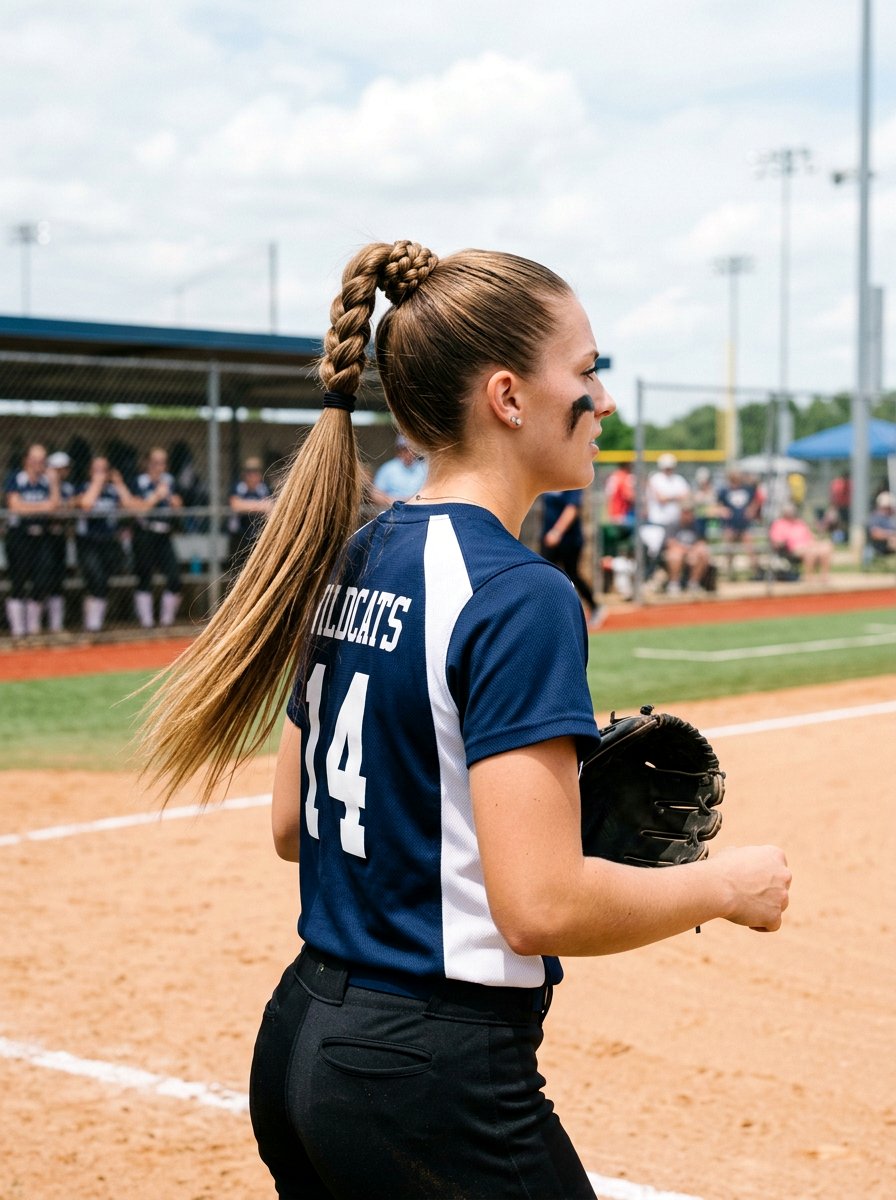
A braided wrap around the base of your ponytail is the simplest way to elevate a basic game day look into something polished and intentional. After securing your ponytail, take a small section of hair from underneath, braid it, and wrap it around the elastic to hide the hair tie before pinning it in place.
This small detail not only looks more finished and photo-ready but also reinforces the base, making the ponytail feel tighter and more stable under a helmet. It is a quick, easy technique that takes less than a minute but makes a noticeable difference in how your hairstyle looks and holds.
This is the perfect option for players who want a bit of extra polish for tournaments or photos without adding significant time to their pregame routine. It works with any ponytail height and any hair type.
Crown Braid With Low Softball Ponytail

For players who despise having any hair near their face, a crown braid feeding into a low ponytail provides 360-degree hair control that is virtually escape-proof. The braid wraps around the hairline in a circular pattern like a built-in headband, then all remaining hair gathers into a low ponytail at the back.
The low placement works beautifully with helmets because it sits beneath the back edge of most gear and avoids creating uncomfortable pressure points. This is especially ideal for players with layered cuts or growing-out bangs who want every piece completely secured.
It is also a great choice for hot tournaments where having hair off your face and neck is essential for comfort and focus. The crown braid looks elegant and intentional while providing the kind of total hair control that lets you focus entirely on the game.
French Braid Into Softball Ponytail

A French braid transitioning into a ponytail is one of the smartest, most game-ready combinations you can wear on the diamond. The braid starts at the front hairline and moves straight back, picking up small sections along the way so it lies completely flat under a helmet.
Once you reach the nape or mid-section, you secure the braid with an elastic and gather everything remaining into a snug ponytail. This keeps the top of your head perfectly tight and prevents bangs or shorter layers from falling forward during fielding, batting, or baserunning.
It works especially well for thick or layered hair because the French braiding distributes tension evenly across your scalp. This means no headaches, no slippage, and minimal touch-ups between plays, even during marathon tournament days with back-to-back games.
Fishtail Braid Ponytail For Softball

A fishtail braid ponytail gives you a more detailed, textured finish while still being strong enough for serious competitive play. Hair is gathered into a mid ponytail, split into two sections, and crossed over in small alternating pieces to form the intricate fishtail pattern that looks far more complicated than it actually is.
This braid style excels at locking shorter layers into place because the tight, overlapping sections reduce slipping and flyaways. The ponytail base should be smoothed with gel for a clean look that stays neat under helmets throughout every inning.
Fishtail braid ponytails look especially impressive on thicker hair where the woven texture shows off beautiful dimension. It is a strong choice for tournaments, travel games, and team pictures where you want both lasting power and standout style.
Softball Rope Braid Ponytail

The rope braid ponytail uses a sleek, twisted two-strand technique that feels aerodynamic and stays locked in while you sprint the bases. Split your ponytail into two sections, twist each one in the same direction, then twist them together in the opposite direction so they grip each other and hold tight.
This twisting method creates a smooth, streamlined surface that reduces snagging on equipment and jerseys, which is a surprisingly common annoyance with looser styles. The rope structure is incredibly resistant to unraveling, making it perfect for repetitive, high-speed movements.
This is an excellent choice for players with medium to long hair who want a fuss-free braid that handles full tournament days without needing to be redone. It especially benefits layered cuts because the twisted structure catches and secures shorter pieces more effectively than a regular ponytail.
Bubble Braid Softball Ponytail

The bubble braid ponytail is one of the most playful, personality-packed options that still handles wind, running, and sliding like a champion. After pulling hair into a ponytail, elastics are placed every few inches down the length and each section is gently tugged to create rounded, voluminous bubbles.
The base stays sleek and helmet-friendly while the fun, bubbly texture sits behind you and does not interfere with gear. This design significantly reduces whipping and tangling during sprints, which means less painful post-game brushing at the end of a long day.
This is a favorite for outfielders and base runners who want a style that shows personality while keeping strands completely contained. It photographs beautifully and has become a social media staple for softball players who want their game day hair to be just as impressive as their game day performance.
Dutch Braid Softball Ponytail

For players who love visible texture, the Dutch braid ponytail sits raised off the scalp for a bold, athletic look that stands out from the stands. The inside-out braiding technique makes the braid pop up and look defined, giving it more dimension than a standard French braid while fitting comfortably under gear.
Start near the hairline, braid straight back with strands crossing under, and stop near the crown or nape before tying the rest into a firm ponytail. This structure hugs the scalp securely and minimizes shifting during aggressive moves like stealing bases or making diving catches.
It suits straight, wavy, and curly hair equally well and is perfect for players who want their hairstyle to stand out in photos while remaining completely practical for long tournament days. The raised texture looks fantastic from every angle.
High Softball Braid Ponytail

The classic high braid ponytail remains one of the most reliable, game-proven styles for a reason. Hair is brushed straight back, gathered high on the crown, and then braided in a basic three-strand braid from the elastic all the way down to the ends. Simple, effective, and virtually indestructible.
The braid eliminates tangles and reduces whipping while you sprint, and a touch of gel or hairspray at the roots keeps flyaways under control even in the most humid conditions. This style works well for medium to long hair and is particularly helpful for frizz-prone hair types.
It is the foundation that many more complex softball styles are built on, and sometimes the original is still the best. When you need something quick, trustworthy, and effective, the high braid ponytail delivers every single time without fail.
Softball Ponytail With Side French Braid

Adding a single side French braid into your ponytail provides extra control where you need it most without requiring you to braid your entire head. The braid starts near the temple and runs diagonally back to meet a low or mid ponytail, tucking away shorter pieces around the face along its path.
This asymmetric look adds visual interest to team photos while remaining quick and simple enough to do before warm-ups. It fits comfortably under helmets because the top remains smooth and flat, with the braid sitting close to the scalp on one side.
This style is especially practical if you part your hair to one side and always struggle with the heavier section falling forward during play. The braid anchors that section permanently, freeing you to focus entirely on the game instead of constantly tucking hair behind your ear.
Double Boxer Braid Into One Ponytail
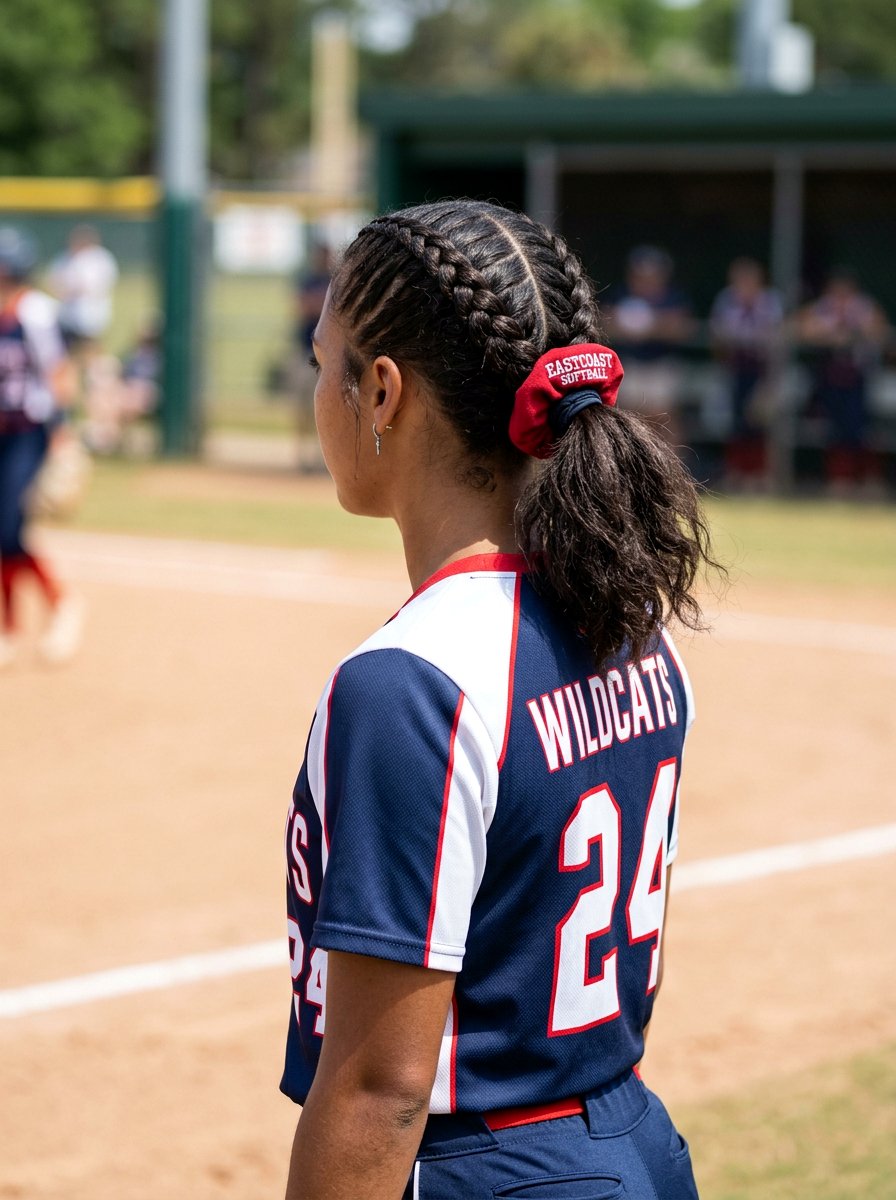
On long double-header days, double boxer braids that merge into a single ponytail can be a genuine lifesaver. Two Dutch braids are created on each side from front to nape, staying close to the scalp, then joined together at the back into one sturdy ponytail that fits perfectly under helmets and caps.
The dual-braid foundation distributes pressure evenly across your scalp, preventing headaches and keeping the ponytail from sagging as you sweat and move throughout long games. It works especially well for very long or heavy hair that can be difficult to control in a single ponytail.
This combination gives you the secure feel of boxer braids with the comfortable movement of a ponytail, striking the perfect balance between total control and relaxed style. It is popular with infielders and catchers who need everything locked down while still wanting some soft movement at the back.
Waterfall Braid Into Softball Ponytail

For softer, more romantic detail that still works during competitive play, a waterfall braid feeding into a ponytail brings a delicate touch to an athletic style. The waterfall braid frames the top or side of the head, letting some strands cascade through while others weave over them before everything is gathered into a ponytail.
While it looks delicate, tightening the base and smoothing the sides creates a game-ready finish that does not interfere with helmet comfort. This style is popular for special events like travel tournaments, senior nights, and picture days where you want beauty and performance in equal measure.
It works best on longer hair where the cascading effect really shows, and pairing it with a strong elastic plus light hairspray ensures it holds through warm-ups, full games, and post-game photos without losing its gorgeous shape.
Softball Ponytail With Side Dutch Braid

A side Dutch braid flowing into a ponytail gives you a raised, visible braid that adds dimension and flair while remaining completely practical. The braid sits along the hairline with strands crossing under so it pops up and stands out, then merges into a ponytail at the back for comfortable movement.
This layout provides strong hold on the front and side of your head, making it ideal for windy fields or players who spend a lot of time running between bases. The Dutch technique gives the braid more visual presence than a French version.
This is an excellent middle ground between a full boxer braid and a plain ponytail, offering the stability of braiding where you need it most while keeping the rest of your hair in a comfortable, easy-to-manage ponytail.
Softball Ponytail With Mini Accent Braids

When you want something more interesting than a basic ponytail but only have a couple of minutes before the game, mini accent braids are the perfect quick upgrade. Gather hair into a ponytail, then pull out one or two small sections and braid them into simple three-strand or mini Dutch braids for added texture.
These tiny braids add a sporty, detailed touch without affecting helmet comfort or adding significant time to your pregame routine. The main structure remains a secure ponytail, so the foundation is solid and reliable for any position on the field.
This easy, customizable style works beautifully on all hair types and is a great option for days when you want to look put-together without any fuss. Add team-colored elastics at the ends of the mini braids for an extra pop of spirit.
Dutch Boxer Braid Softball Ponytail

Dutch boxer braids that flow into a single ponytail combine toughness with a streamlined profile that works well for every position on the field. Center part, two snug Dutch braids on each side down to the nape, then stop braiding and gather everything into one ponytail for a balanced look.
This gives you the strong, secure feel of full boxer braids with the comfortable swish of a ponytail, which many players prefer over braids that run all the way down the back. The flat braids fit easily under helmets and the ponytail can be adjusted to suit different cap or mask styles.
It is particularly practical for catchers and infielders wearing heavy gear, since the streamlined design creates fewer pressure points while maintaining the total hair control that competitive play demands.
Softball Low Ponytail With Simple Braid

When comfort is the absolute priority, a low ponytail with a simple three-strand braid through the length is an easy, reliable choice that never lets you down. Gather hair at the nape, secure it firmly, and braid the ponytail down to the ends. That is it. Done.
This low placement works especially well with certain helmet styles and face masks because the ponytail sits beneath most gear and avoids any rubbing or uncomfortable pressure. A bit of smoothing product at the roots prevents flyaways without making the hair feel stiff or crunchy.
This is ideal for younger players, catchers, or anyone who prefers minimal scalp tension and wants a style that can be quickly redone between games if needed. It is the trusty, no-drama option that prioritizes function and comfort above everything else.
Softball High Ponytail With Braided Length
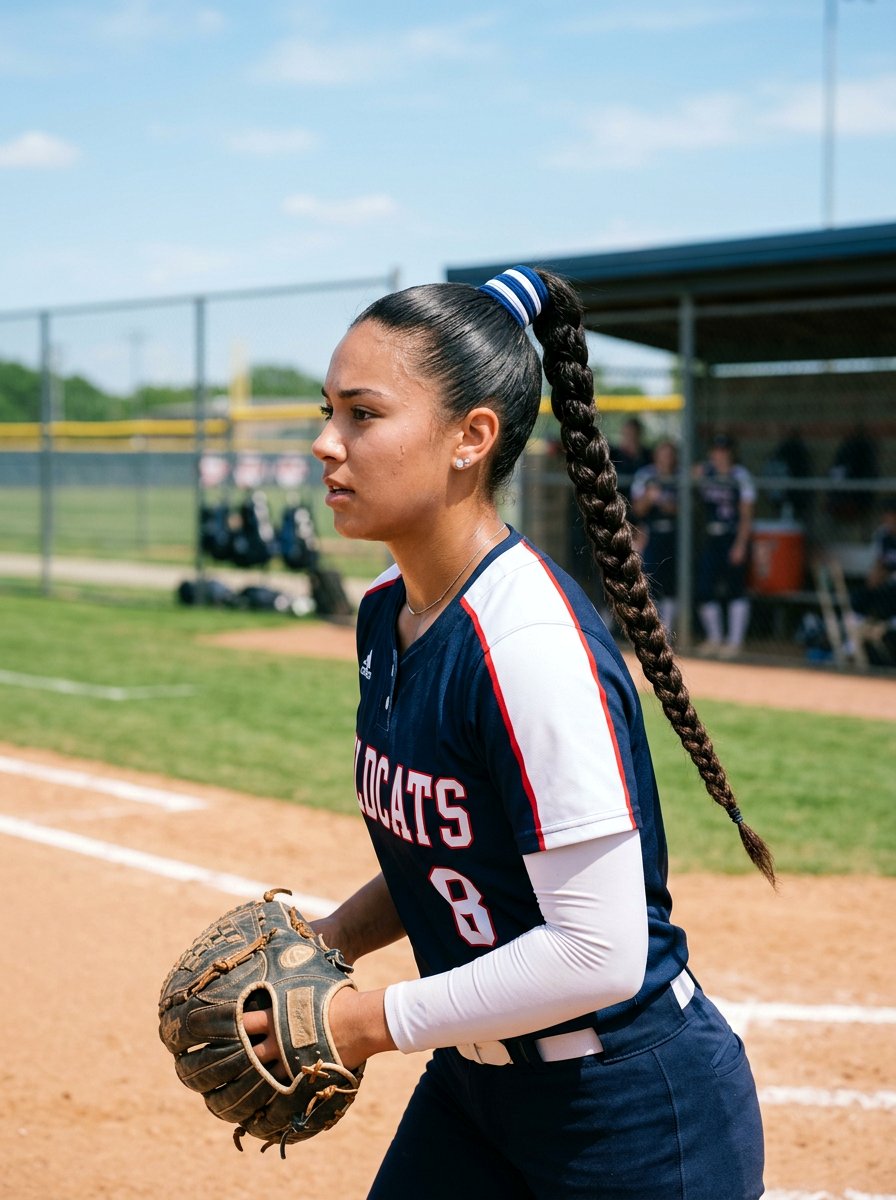
A high ponytail with the full length braided gives a strong, energetic look that feels completely at home on the diamond. The ponytail sits high on the head to keep hair off the neck, while the braided length prevents tangling and whipping during fast, explosive movements across the field.
This is an especially great setup for outfielders and fast runners who cover a lot of ground. Keeping the sides and top tight with gel or smoothing spray makes it helmet-ready and ensures it lasts through multiple games without needing a redo.
It is endlessly customizable by adjusting the ponytail height, braid tightness, or braid style, and it works beautifully across all hair textures. This is the versatile, dependable go-to that many players rely on as their default practice and game day hairstyle because it simply works.
Softball Braided Pigtail Ponytails

Braided pigtail ponytails bring youthful energy to the field while distributing weight evenly on both sides of your head for all-day comfort. Part down the middle, secure two ponytails, and braid each one into simple three-strand or Dutch braids for maximum control and security.
The balanced design fits well with many helmet styles because the ponytails sit to the sides rather than creating one bulky spot at the back. It is especially comfortable during double-headers and long tournament days when you need a style that does not cause scalp fatigue.
This look is popular with younger players but works for athletes of any age who enjoy a fun, spirited feel. Accessorize with team-colored elastics or ribbons at the base of each pigtail to show team spirit while keeping everything firmly secured for serious competition.
Softball Ponytail With Bubble Braided Length

Combining a standard ponytail base with a bubble-braided length gives you a secure, modern finish that is perfect for windy fields and fast-paced games. After tying your ponytail, add several elastics down the length and gently pull each segment outward to create even, rounded bubbles that prevent whipping and knotting.
A sleek base with smoothing product keeps the style helmet-friendly and controls frizz as you sweat and move through intense gameplay. The bubbles add a fun, eye-catching element that looks fantastic in team photos, social media clips, and highlight videos.
This is a great choice for players who want something that feels current and stylish while remaining completely practical for competitive play. It works on medium and long hair and has become one of the most popular softball hairstyles for players who want the best of both worlds.
Final Thoughts
The right softball braid ponytail gives you the confidence to focus entirely on the game, knowing your hair is secure, comfortable, and looking great from first pitch to final out. Whether you prefer the simple reliability of a braided high ponytail, the creative flair of a butterfly braid, or the total control of boxer braids merging into one tail, there is a style here for every player and every position.
Experiment with different combinations during practice to find your perfect match, and keep a small kit of elastics, bobby pins, and light-hold hairspray in your equipment bag so you are always game-day ready. Your hair should work as hard as you do on the field, and these twenty styles are designed to do exactly that.
